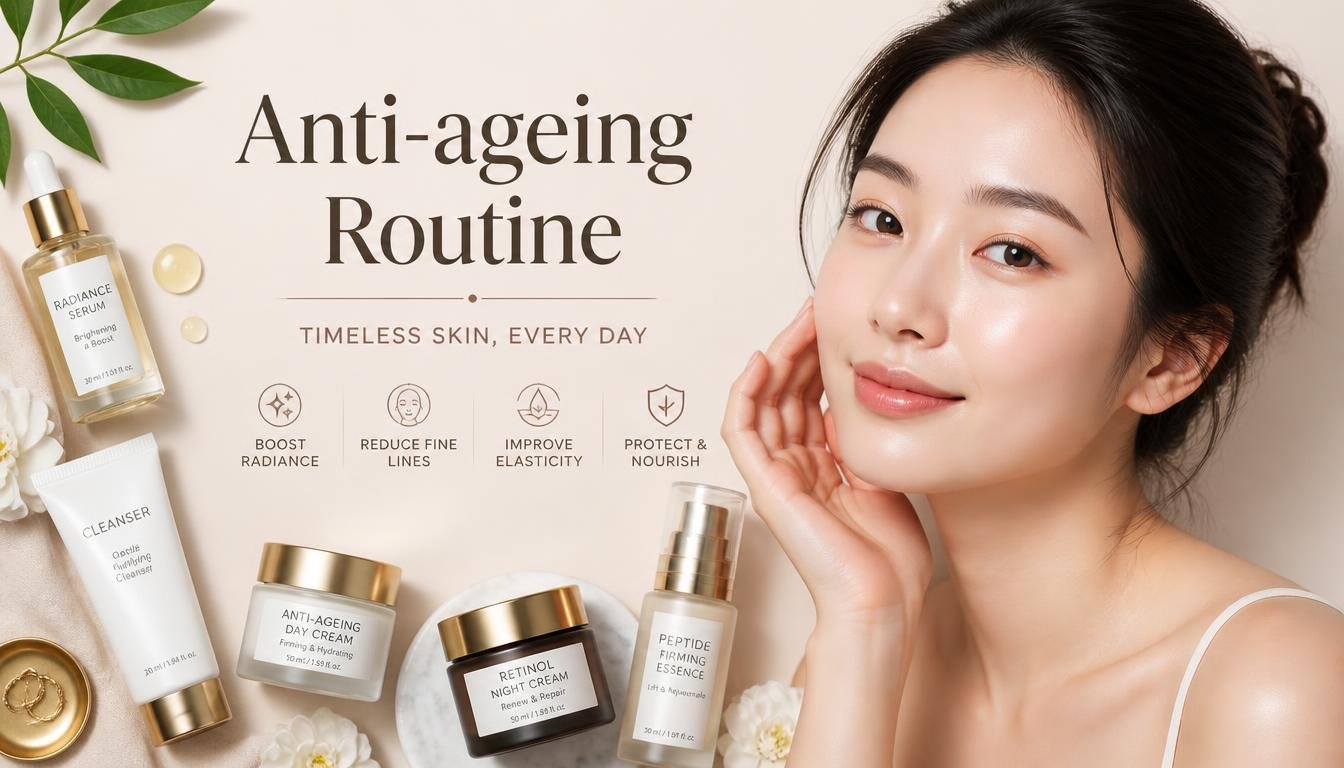
The Korean Anti-Ageing Philosophy — Prevention Over Correction
The most important difference between Korean and Western anti-ageing approaches is the timeline. Western anti-ageing products are predominantly corrective — retinoids, peels, and treatments aimed at reversing visible damage. Korean anti-ageing is predominantly preventative — starting SPF and barrier support in the early twenties, before damage accumulates, and using gentle consistent actives that make correction largely unnecessary.
This is not a marketing claim — it is a measurable epidemiological observation. Korean skin ageing rates, as tracked across dermatological studies comparing East Asian and Caucasian populations, show significantly slower collagen depletion and skin thinning in populations with consistent SPF and barrier-care habits than in equivalent populations without them. The genetics play a role; the habits play a larger one.
The Korean anti-ageing stack works through five simultaneous mechanisms: daily UV protection to prevent ongoing collagen degradation, fermented actives to support cellular renewal, peptides to stimulate new collagen production, hydration to maintain plumpness and elasticity, and ceramide barrier repair to preserve all of the above.
How UK Conditions Accelerate Skin Ageing
UK residents face three specific environmental factors that accelerate the mechanisms of skin ageing beyond the baseline:
Hard water ceramide depletion. London water at 300–400 mg/L hardness strips ceramides from the skin barrier with every wash. Ceramides are the primary structural component of the barrier — their depletion increases transepidermal water loss, decreases skin plumpness, and allows environmental irritants deeper access to the dermis. Long-term, ceramide deficiency accelerates visible skin thinning and fine line formation.
UVA year-round through cloud cover. Most UK residents underestimate their UV exposure because it is rarely felt as warmth or seen as direct sunlight. UVA — the spectrum responsible for photoageing (collagen degradation, melanin overproduction, elastin damage) — penetrates cloud cover and glass windows year-round. A day working by a window in a London office provides meaningful UVA exposure without any sensation of sun. Cumulative UVA damage from years of window exposure is the primary driver of the premature ageing UK indoor workers experience.
Central heating TEWL. Indoor humidity in centrally heated UK homes drops to 30–35% from November to February. At this humidity, the skin continuously loses water through transepidermal evaporation — accelerating the dehydration-driven loss of plumpness that makes fine lines more visible. This is not the same as skin ageing structurally, but it makes aged skin look and behave older and removes the plumpness that acts as a visual buffer against fine lines.
The Anti-Ageing Routine — At a Glance
| Step | Product type | AM | PM |
|---|---|---|---|
| 01 | Oil cleanser | — | ✓ |
| 02 | Low-pH cream cleanser | ✓ (gentle) | ✓ |
| 03 | Fermented first essence | ✓ | ✓ |
| 04 | Peptide toner | ✓ | ✓ |
| 05 | HA serum | ✓ | ✓ |
| 06 | Regenerating essence (snail) | Optional | ✓ |
| 07 | Brightening serum | ✓ | Optional |
| 08 | Anti-ageing moisturiser | ✓ | ✓ |
| 09 | SPF 50+ PA++++ | ✓ last step | — |
Ageing skin’s barrier is more fragile than younger skin. Mechanical cleansing and high-pH surfactants cause disproportionate disruption in skin with reduced ceramide content. The oil balm approach — applied to completely dry skin, massaged, emulsified with water, rinsed — dissolves SPF and pollution without involving the friction and alkaline disruption of water-only cleansing. Non-negotiable as the PM first step.
Ageing skin should never use a foam or high-pH cleanser. The acid mantle in older skin takes longer to recover from alkaline disruption, and the post-cleanse window where barrier proteins are temporarily disrupted extends longer than in younger skin. A cream or gel cleanser at pH 5–6 cleanses without this disruption. In the morning, a brief 15-second gentle cleanse is sufficient.
The fermented first essence is the foundational anti-ageing step in Korean skincare — the equivalent of the base layer before all other actives. Galactomyces ferment filtrate at high concentration improves skin translucency, texture, and luminosity through multi-mechanism fermented actives that also enhance the penetration of everything applied after. This is the step that produces the glass skin effect as a baseline — not as an occasional outcome.
Apply to damp skin immediately post-cleanse — within 30 seconds. Press with clean hands, allow 30 seconds to absorb, proceed immediately to the peptide toner. The layering of two first steps (essence then toner) is the Korean anti-ageing approach: flood the skin with fermented actives and ceramide actives before mineral deposits form.
The peptide toner step adds ceramide and signal peptide delivery at the toner layer — the ceramide-peptide-cholesterol combination begins barrier repair and collagen stimulation before the dedicated serum steps. For ageing UK skin dealing with hard water ceramide depletion, getting ceramide actives into the routine at the earliest possible step is the correct strategy.
Ageing skin’s HA content declines measurably — the structural HA in the dermis that provides plumpness and cushioning reduces with age and is compounded by UK hard water damage. A multi-molecular-weight HA serum applied to damp skin delivers hydration at every depth simultaneously. The seal-within-30-seconds rule is critical in UK winter: in centrally heated air, unsealed HA draws moisture from within the skin toward the dry surface.
The regenerating essence step is where ageing skin’s most intensive overnight repair happens. Snail mucin — glycoproteins, allantoin, and native HA combined — provides the raw materials for the cellular repair cycle that accelerates during sleep. Consistent PM application produces the most visible improvement in skin texture and fine line depth of anything in this routine except SPF and ceramide moisturiser.
Post-inflammatory hyperpigmentation from acne history, sun damage, and the accumulated UVA exposure of years without sufficient SPF — all visible as dark spots, uneven tone, and the lack of luminosity that makes skin look older than it is. A galactomyces and vitamin C brightening serum addresses all three pathways simultaneously: inhibiting melanin transfer (niacinamide), providing antioxidant protection (vitamin C), and improving translucency (galactomyces).
The moisturiser seals all underlying layers and provides the primary ceramide barrier replacement for hard water-damaged skin. For anti-ageing, the moisturiser should contain ceramides (barrier repair) plus brightening or collagen-supporting actives — niacinamide, ginseng, fermented rice bran. The Beauty of Joseon Dynasty Cream combines all three alongside a texture that works both AM and PM without being too heavy or too light.
SPF is the most effective anti-ageing product in any routine — more effective than retinol, peptides, and vitamin C combined. The reason: all other actives repair or stimulate. SPF prevents the primary source of ongoing damage from occurring. UVA penetrates cloud cover year-round in the UK and drives collagen degradation, elastin damage, and melanin overproduction continuously, regardless of season.
PA++++ UVA rating is the critical spec. PA++++ indicates maximum UVA protection. Most Western SPFs with equivalent SPF50 sun protection ratings have significantly lower UVA protection than Korean PA++++ formulas. For anti-ageing specifically, the UVA rating matters more than the SPF number.
Weekly Treatments — Collagen Overnight Mask
Two to three nights per week, replace the PM moisturiser with an overnight collagen mask. The sustained contact time — 6–8 hours while you sleep — delivers collagen peptide fragments for significantly longer than a standard application, allowing deeper barrier integration of the actives. After four weeks of consistent weekly use, users report measurably firmer morning skin and visibly reduced fine line depth.
Products above contain Amazon UK affiliate links. Full disclosure policy.
Adding Retinol — The Korean Approach
Retinol is the most evidence-backed anti-ageing active in cosmetic science — it accelerates cell turnover and stimulates collagen production through retinoic acid receptor pathways. The Korean approach to retinol differs from Western usage in two ways: start lower (0.025–0.05%) and buffer with ceramide and centella actives rather than using it standalone.
When to add it: After the baseline routine above has been stable and reaction-free for four weeks. Introduce retinol as the final PM active step — after snail mucin essence, before moisturiser.
Frequency: Two evenings per week for the first month, increasing to three then four as skin adjusts. Never use retinol on the same evening as AHA/BHA exfoliation.
The K-beauty retinol buffer: Apply snail mucin essence before retinol to provide glycoprotein and allantoin protection. Apply the Beauty of Joseon Dynasty Cream after retinol to seal and soothe. This reduces irritation substantially compared to standalone retinol use.
Frequently Asked Questions
Want an anti-ageing routine matched to your skin?
Take our free 2-minute skin quiz for a personalised Korean anti-ageing routine based on your skin type, age, and UK conditions.
Take the Free Quiz →This guide covers cosmetic skincare only and does not replace dermatologist advice for skin conditions or prescription treatments.