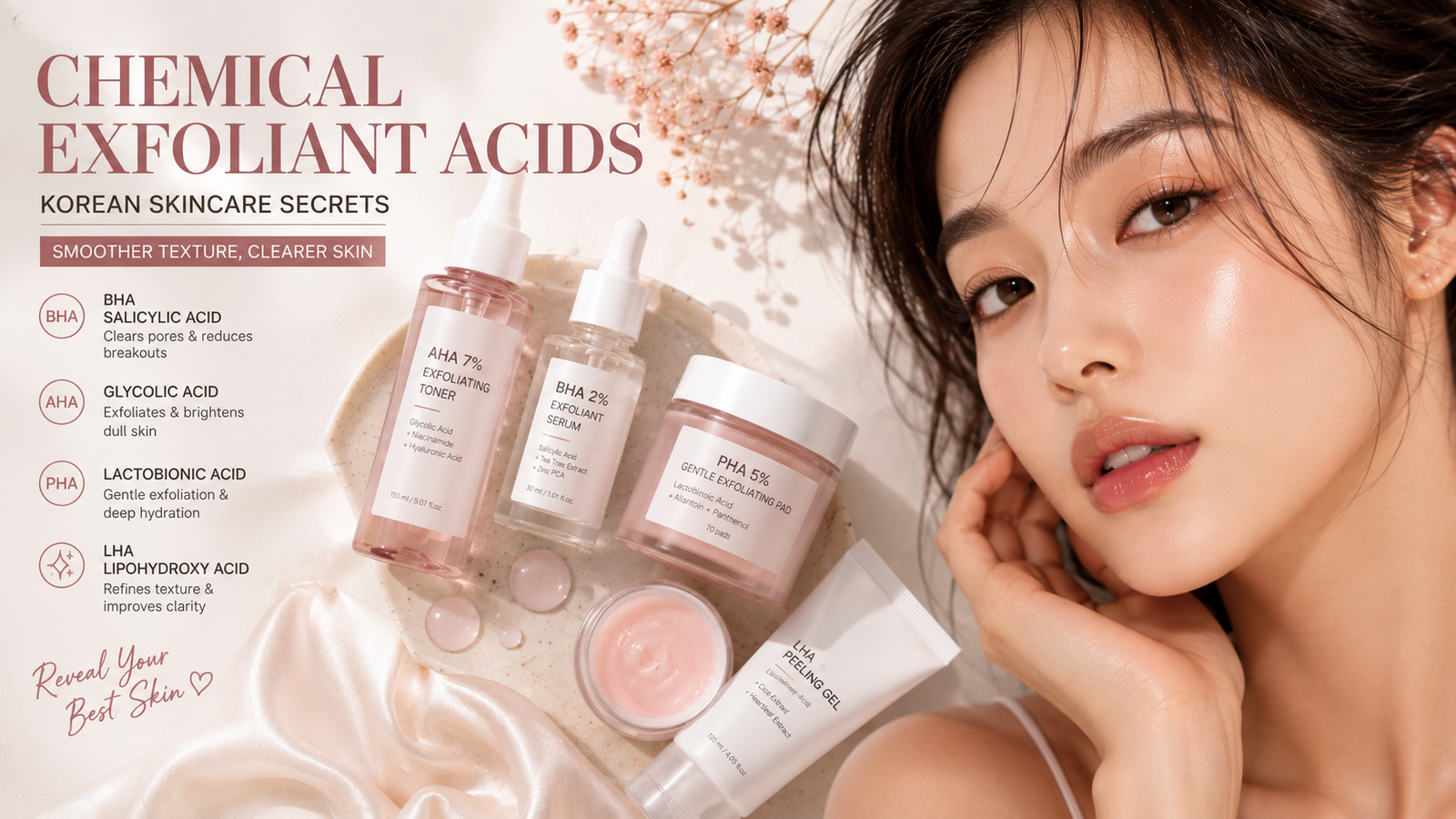
What Chemical Exfoliants Do — and Why They Outperform Scrubs
Chemical exfoliants dissolve the bonds between dead skin cells and the living cells beneath them — allowing the dead cell layer to shed uniformly rather than accumulating and flattening the skin’s appearance. Unlike physical scrubs (which provide uneven exfoliation and can cause micro-tears in the skin surface), chemical exfoliants work evenly across the skin surface at a cellular level.
The three acid categories — AHA, BHA, and PHA — work at different depths and address different concerns. Understanding which to use (or which combination) for your specific skin type is the difference between visible results in 2 weeks and 6 months of using the wrong acid for the wrong problem.
AHA — Alpha Hydroxy Acids
AHAs are water-soluble acids that work at the skin’s surface — breaking down the bonds between dead corneocytes and accelerating their shedding. The result: smoother texture, improved luminosity, reduced appearance of fine lines, and faster cell turnover that moves pigmented cells to the surface where they can shed.
Glycolic acid — smallest molecule, deepest penetration of all AHAs. Most potent but also most irritating. Highly effective for photoageing and stubborn pigmentation.
Lactic acid — gentler than glycolic, also hydrating (hygroscopic). The most appropriate AHA for dry or sensitive UK skin. Also present naturally in fermented actives like galactomyces.
Mandelic acid — largest molecule AHA, gentlest penetration. Suitable for the most reactive skin types and darker skin tones where glycolic acid irritation risk is higher.
Best for: Dull skin · Fine lines · Uneven texture · Hyperpigmentation · Anti-ageing
BHA — Beta Hydroxy Acid (Salicylic Acid)
BHA — salicylic acid and its derivatives (betaine salicylate, willow bark extract) — is oil-soluble. This is the critical difference from AHA: oil solubility allows BHA to penetrate the sebum that fills pores, dissolving the sebum-dead cell blockages that cause blackheads, whiteheads, and the congestion that precedes breakouts. AHA cannot do this — it is water-soluble and cannot penetrate the oil-filled pore environment.
BHA also has anti-inflammatory properties — it reduces the redness and swelling of active breakouts while clearing the congestion that caused them. This dual action (pore clearing + anti-inflammatory) makes BHA the primary acid for acne-prone and congested skin.
Best for: Blackheads · Whiteheads · Acne · Congested pores · Oily skin
PHA — Polyhydroxy Acid
PHAs (gluconolactone, lactobionic acid, galactose) are the gentlest chemical exfoliants — larger molecules that exfoliate only at the very surface of the skin without penetrating to the depth that AHAs and BHAs reach. This makes PHA:
— Safe for sensitive and reactive skin that cannot tolerate AHA or BHA irritation
— Appropriate for rosacea-prone skin where acid exfoliation is necessary but lower-depth options are required
— Suitable for daily use where AHAs and BHAs require 2–3 times weekly maximum
— Hydrating as well as exfoliating (PHAs are humectants)
Best for: Sensitive skin · Rosacea · Beginners to chemical exfoliation · Daily gentle ongoing exfoliation
UK Skin and Chemical Exfoliation
The Best Acid Products Available in the UK
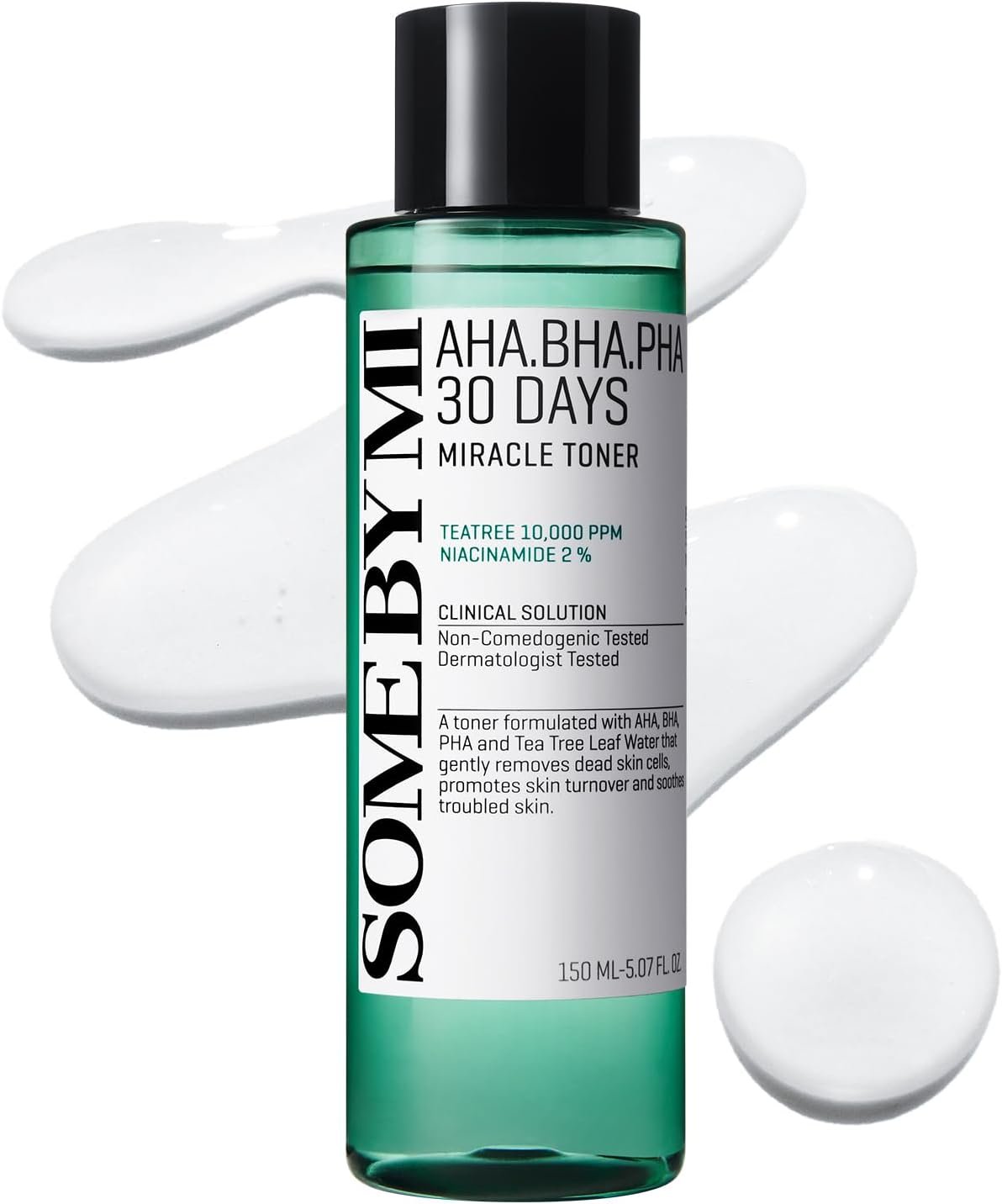
All three acid types in one toner — the most comprehensive single-product chemical exfoliant available in the UK. AHA addresses surface texture and pigmentation, BHA penetrates pores for congestion clearance, PHA provides gentle ongoing exfoliation suitable for reactive areas. Niacinamide adds sebum regulation and brightening. 5,000+ UK ratings at 4.5/5 — the most validated acid toner on the UK market. Use 2–3 evenings per week as the toner step.
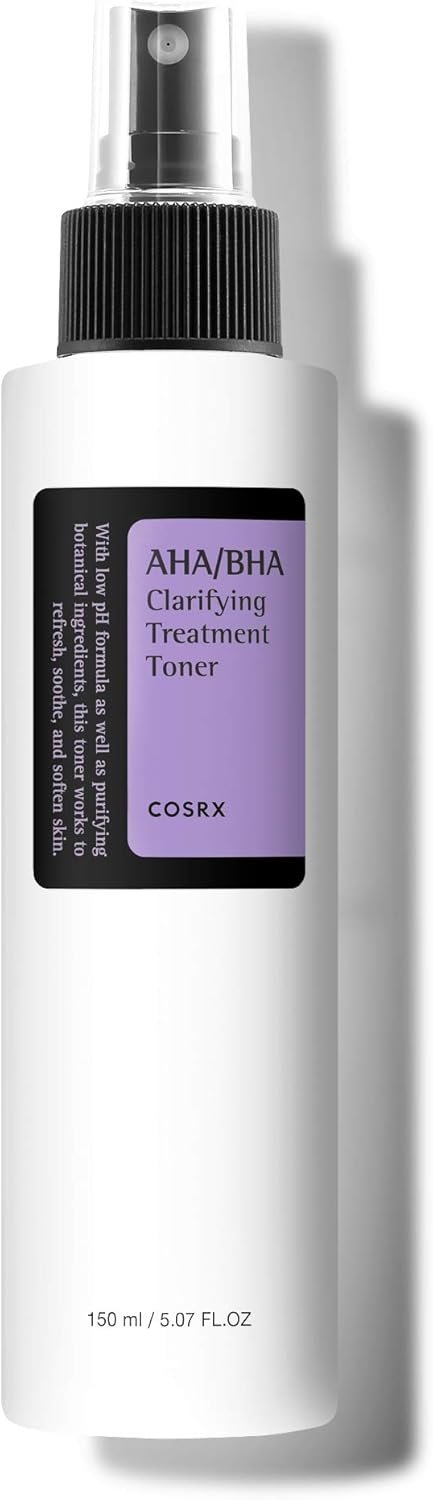
Apple fruit water as the base — naturally high in AHA (malic acid) — with willow bark extract (natural BHA source). A gentler acid toner formulation than the Some By Mi, suitable for more frequent use (4–5 evenings per week for most skin types). The choice for oily skin that wants mild ongoing exfoliation built into a near-daily routine without the full acid commitment of the triple-acid Some By Mi formula.
BHA (betaine salicylate) built into a pH 5.0–5.5 daily cleanser — the most sustainable way to maintain pore clearance without daily acid toner commitment. The BHA in the cleanser contact time (60–90 seconds) provides meaningful pore decongestion without the extended skin contact of a leave-on toner. The daily BHA step that acne-prone UK skin can use every morning without over-exfoliation risk.
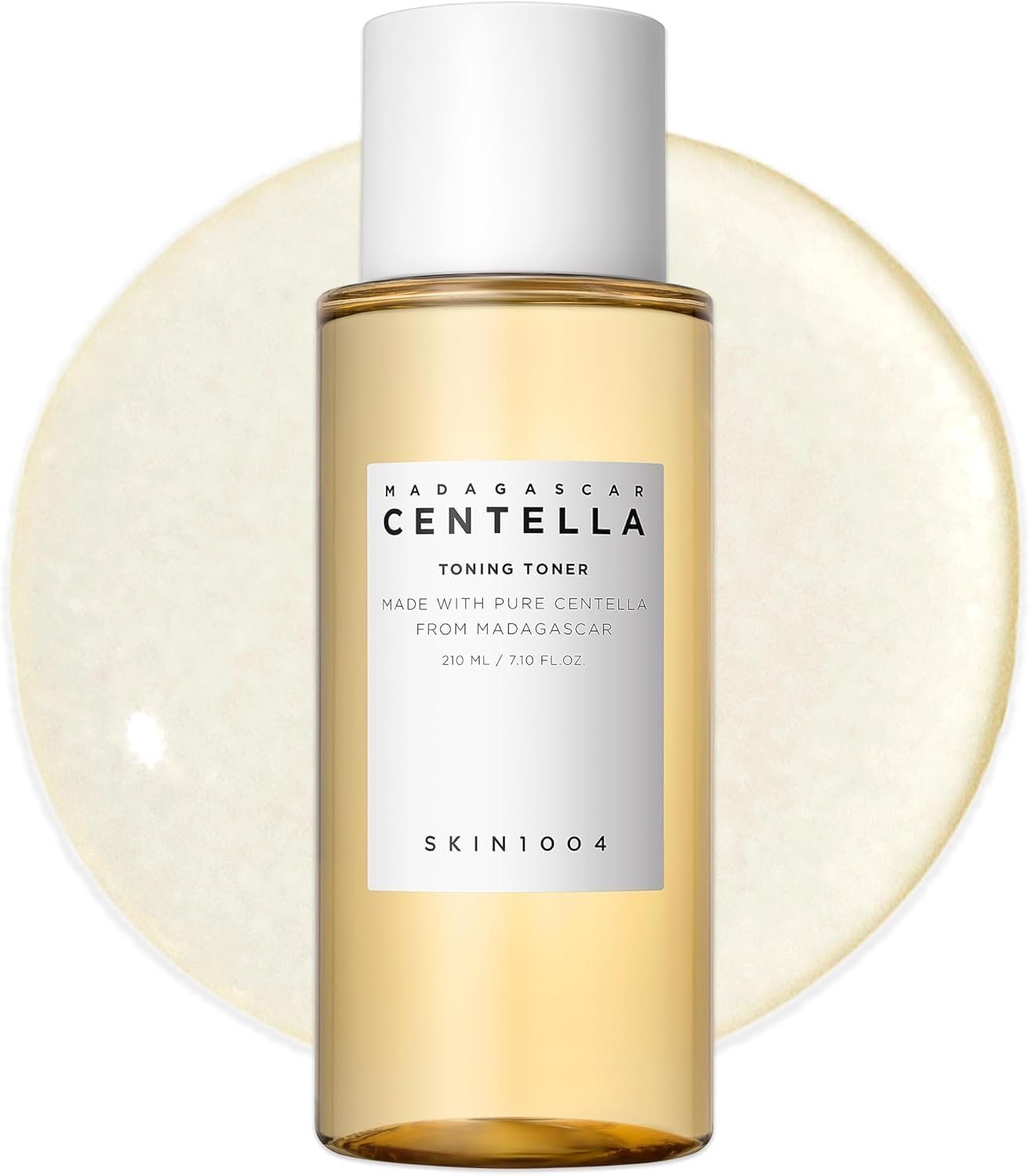
84% centella leaf extract plus PHA (gluconolactone) — the only product on this list that delivers significant calming actives alongside chemical exfoliation in one step. PHA’s larger molecule size means it exfoliates only at the most superficial skin layer — making it safe for daily use on sensitive skin that cannot tolerate AHA or BHA. The choice for rosacea-adjacent or very reactive UK skin that still needs exfoliation. 210ml at excellent value.
Products above contain Amazon UK affiliate links. Full disclosure policy.
How to Use Acids Safely in a Korean Routine
Introduce one acid at a time. Do not introduce AHA, BHA, and PHA simultaneously. Start with one toner at 2× weekly, assess tolerance for 2 weeks, then adjust frequency or add a second acid type.
Use acids at the toner step. In a Korean routine, the acid toner replaces the hydrating toner on exfoliation evenings. Apply after cleansing, before serum. Follow immediately with centella serum or snail mucin to buffer the post-acid skin.
Maximum frequency by acid type:
- AHA (glycolic/lactic): 2–3 evenings per week maximum
- BHA (salicylic): 3–4 evenings per week; daily if in a low-concentration cleanser
- PHA: Daily use safe for most skin types
- Triple acid (AHA + BHA + PHA): 2–3 evenings per week
Never combine with: Retinol on the same evening (use one or the other, not both). Vitamin C (different pH requirements — use vitamin C AM, acids PM).
Always follow with: Snail mucin or centella serum to calm post-acid skin. Ceramide moisturiser to seal and repair. PA++++ SPF every morning after any acid use the previous evening.