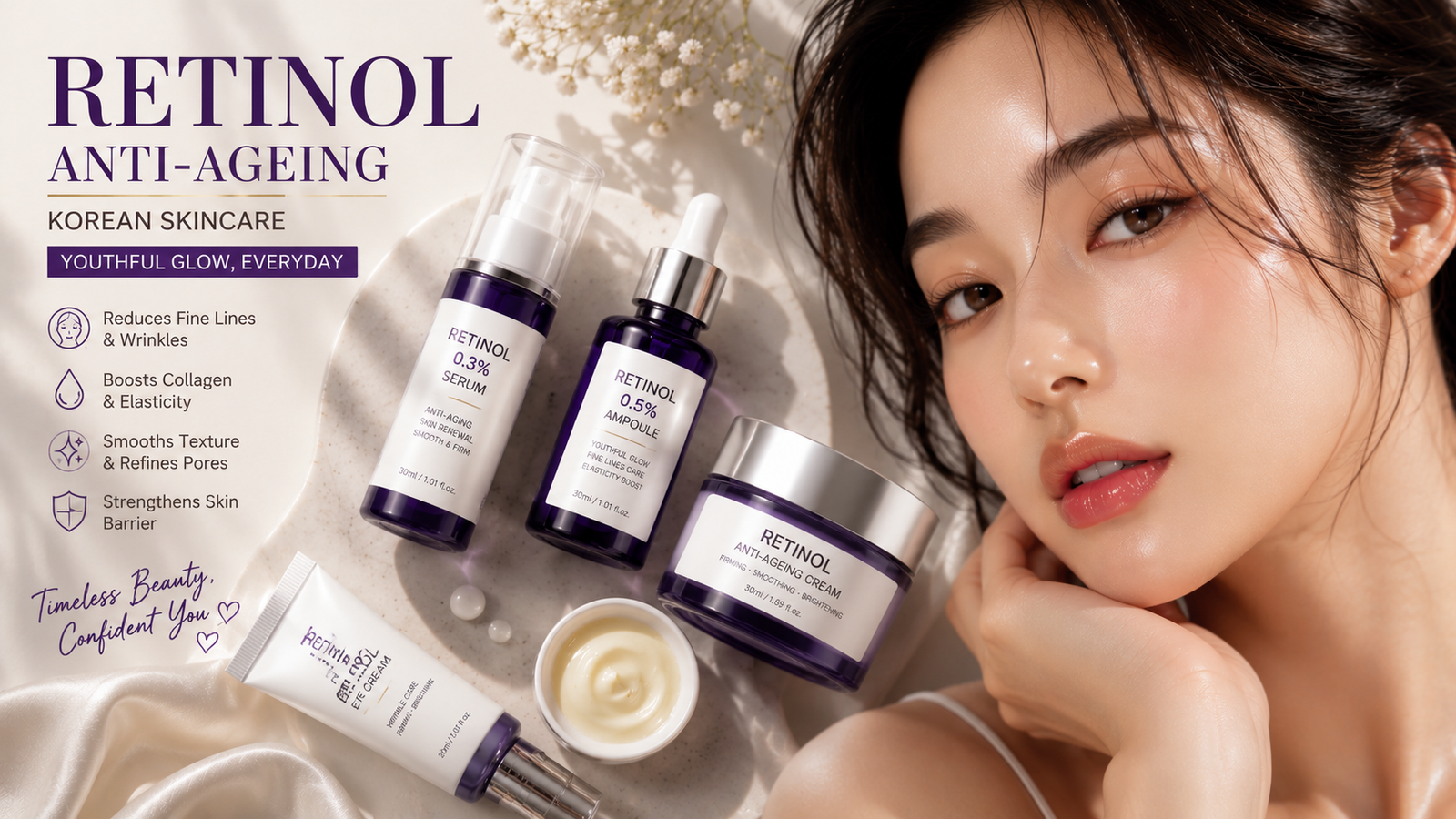
What Retinoids Are — Vitamin A Derivatives for Skin
Retinoids are a family of vitamin A derivatives that interact with retinoic acid receptors (RARs) in skin cell nuclei — directly influencing gene expression related to cell turnover, collagen synthesis, and melanin production. This mechanism makes retinoids uniquely effective: they work at the genetic level, not just the surface. No other cosmetic active class has the same depth of evidence behind it.1
The key outcomes of retinoid use in skin are: accelerated keratinocyte turnover (cells move from dermis to surface faster, reducing the dull surface accumulation that makes skin look aged), stimulated collagen and elastin production (measurably increasing skin thickness and firmness), and inhibited matrix metalloproteinase activity (the enzymes that break down existing collagen fibres).
Retinol & Retinal: Understanding the Retinoid Hierarchy
All retinoids convert to retinoic acid (tretinoin) inside skin cells before producing their biological effects. The difference between retinol & retinal is the number of conversion steps required — fewer steps means faster, more potent activity but also more irritation potential.
Retinoic Acid (Tretinoin) — the active form. Prescription-only in the UK. Most potent, fastest results, highest irritation risk. No conversion required — active immediately on contact with retinoic acid receptors.
Retinal (Retinaldehyde) — one conversion step from retinoic acid. Approximately 10–20× more potent than retinol at equivalent concentrations. Cosmetically available — the highest potency retinoid available without prescription. Used in the Beauty of Joseon product below.
Retinol — two conversion steps from retinoic acid. The most common cosmetic retinoid. Well-evidenced, widely tolerated at low concentrations (0.025–0.1%), requires 8–12 weeks for significant visible results.
Bakuchiol — plant-derived retinol alternative. Not a true retinoid — does not bind retinoic acid receptors. Growing evidence for retinol-like effects through different pathways. Suitable during pregnancy and for skin that cannot tolerate any retinoid irritation.
Why UK Skin Struggles with Standard Retinol Approaches
The Korean Approach to Retinoids
Korean skincare’s retinoid philosophy differs from Western approaches in three important ways that reduce the adjustment period and make consistent use more achievable:
Start lower. Korean formulations typically use 0.025–0.1% retinol or 0.1% retinal — significantly lower than the 0.5–1% concentrations common in Western retinol products. Lower concentrations produce slower but equally effective long-term results with dramatically less adjustment irritation.
Buffer with snail mucin. Applying snail mucin essence before retinol provides a glycoprotein and allantoin layer that reduces retinol penetration speed, moderating the irritation response while preserving the biological activity. This is the most practical UK skin retinol introduction method.
Seal with ceramides. Applying ceramide cream immediately after retinol directly counteracts the barrier disruption that retinol’s cell turnover acceleration causes. The Korean PM routine sequence — snail mucin → retinol → ceramide cream — addresses retinol’s mechanism and its side effect simultaneously.
The Best Retinol & Retinal Products Available in the UK
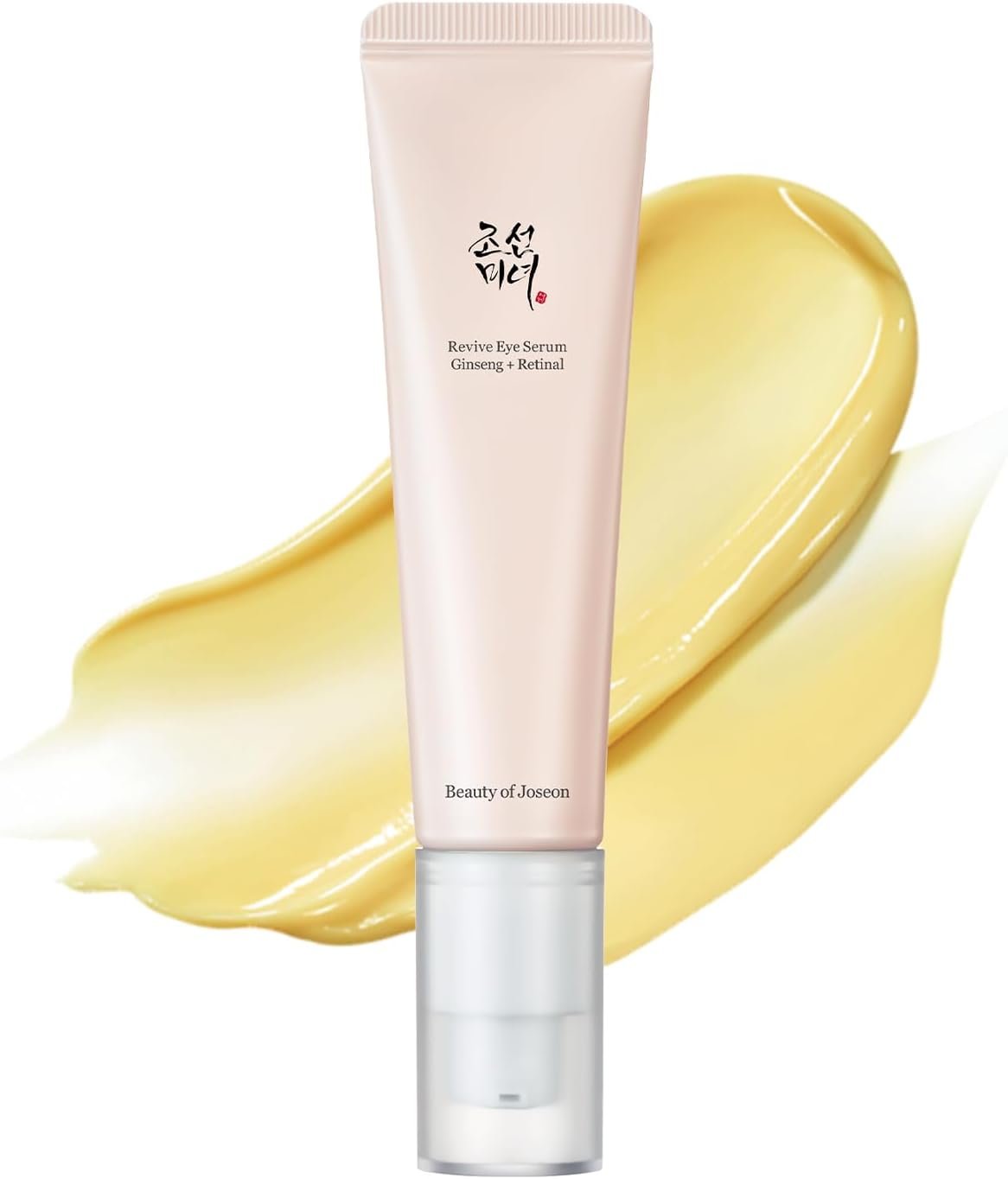
0.1% retinal — the most effective retinoid available without prescription, one conversion step from retinoic acid and 10–20× more potent than equivalent retinol concentrations. Paired with ginseng root extract for antioxidant and circulation-boosting activity. A gentle formula despite the potent retinoid — the 0.1% concentration is well-calibrated for the Korean gradual introduction protocol. Start two evenings per week after snail mucin, before ceramide cream. The best face retinal formula available in the UK.
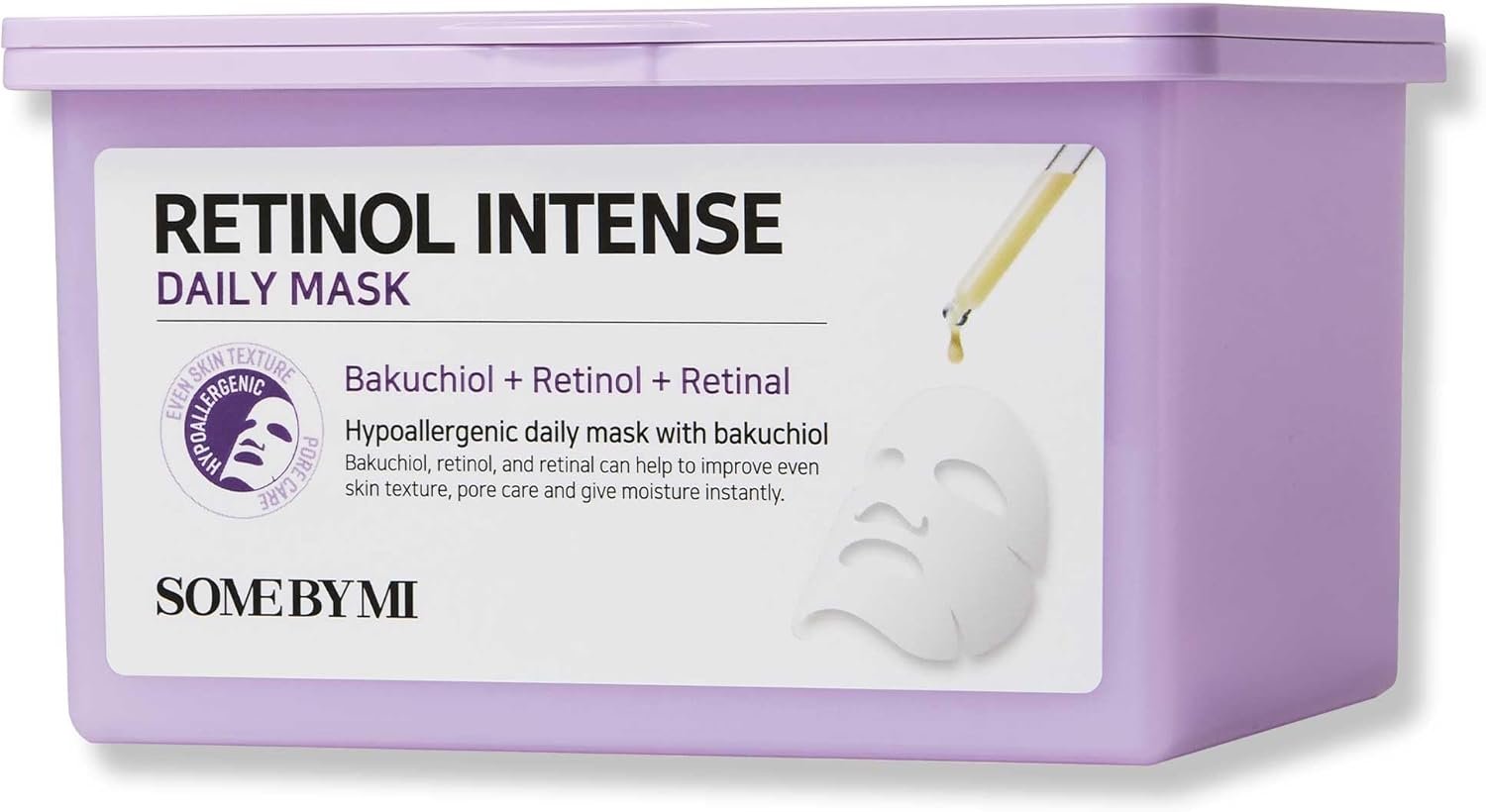
Triple Retinol Complex (retinol + retinal + bakuchiol) plus 8 types of hyaluronic acid in a daily-format sheet mask. The gentlest possible retinoid introduction — sheet format delivers retinol at a low, skin-safe concentration that accumulates with daily use without the irritation of a dedicated retinol serum. The ideal starting point for retinol-naive UK skin: no irritation risk, measurable cumulative benefit at 4 weeks.
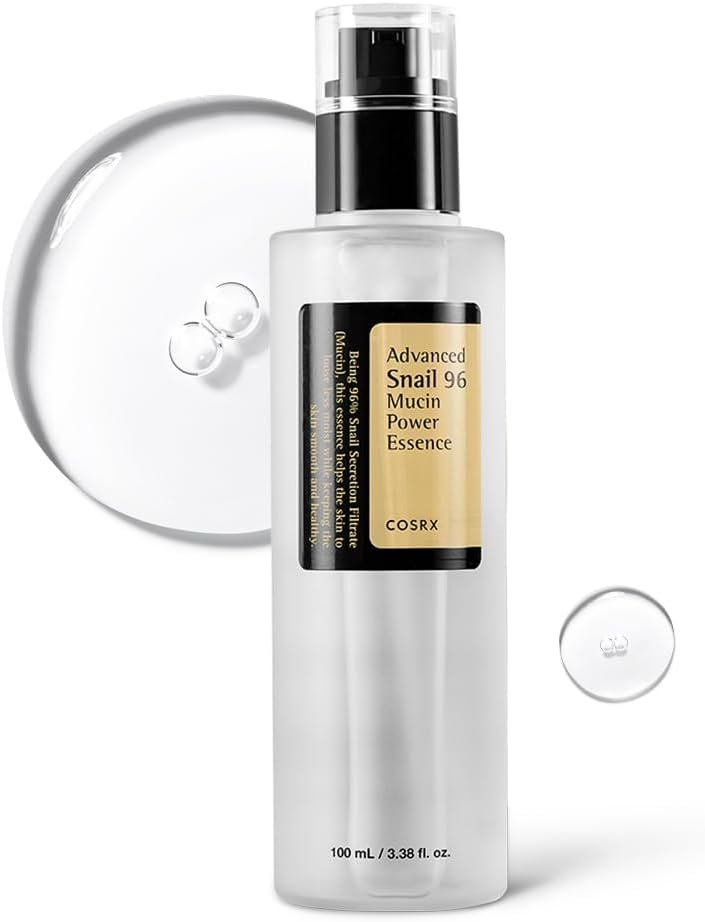
Apply before retinol in the PM routine. The glycoprotein and allantoin layer from snail mucin moderates retinol penetration speed — reducing the adjustment irritation while preserving biological activity. This is not just a complementary product: the snail-then-retinol sequence is the most effective method for making retinol tolerable on UK hard-water-damaged skin during the adjustment period.
Products above contain Amazon UK affiliate links. Full disclosure policy.
How to Introduce Retinol & Retinal into a Korean Routine
The UK introduction protocol (4 phases):
Phase 1 — Weeks 1–2: Apply the Some By Mi Retinol Mask every evening for 15 minutes after toning. Low-dose retinoid exposure without commitment to a dedicated serum. No irritation risk.
Phase 2 — Weeks 3–6: Introduce the Beauty of Joseon Revive Serum two evenings per week after snail mucin. Apply a pea-sized amount to clean, dry skin. Follow immediately with ceramide cream. On the other five nights, continue with snail mucin and ceramide cream only.
Phase 3 — Weeks 7–10: Increase to three evenings per week. Monitor for tolerance — some dryness and mild flaking is normal and resolves. Persistent redness or severe peeling: reduce frequency.
Phase 4 — Weeks 11+: Build to four or five evenings per week as skin tolerates. This is the maintenance phase — results compound continuously with consistent use.
Every morning regardless of phase: PA++++ SPF. Non-negotiable. Retinol temporarily thins the outer skin layer — unprotected UVA exposure during retinol use undoes the collagen-stimulating benefit you are trying to achieve.