What Vitamin C Does in Skin
Vitamin C (ascorbic acid and its derivatives) works through three distinct mechanisms in skin — none of which overlap, which is why it is the most multi-functional single active in cosmetic science:
Tyrosinase inhibition. Tyrosinase is the enzyme that catalyses melanin production — the first step in the pigmentation pathway. Vitamin C inhibits tyrosinase activity, directly reducing new melanin synthesis. This is the primary mechanism behind vitamin C’s brightening effect on dark spots and uneven skin tone.
Antioxidant protection. Vitamin C is a powerful free radical scavenger — it neutralises the reactive oxygen species (ROS) generated by UV radiation and pollution before they can damage collagen fibres, DNA, and lipids. Applied before sun exposure, vitamin C reduces the oxidative damage that drives photoageing and hyperpigmentation.
Collagen synthesis support. Vitamin C is a required cofactor for the enzymes that hydroxylate proline and lysine — essential steps in collagen fibre cross-linking. Without adequate vitamin C, newly synthesised collagen cannot achieve full structural integrity. Consistent topical vitamin C supports the skin’s ability to produce functional collagen.
Why UK Skin Needs Vitamin C
The Vitamin C Stability Problem
L-ascorbic acid (pure vitamin C) oxidises rapidly on exposure to light, air, and water. An oxidised vitamin C serum turns orange-brown and loses its activity — the antioxidant has already reacted with oxygen before it reaches your skin. Most vitamin C serums are fully oxidised within 3 months of manufacture, regardless of what the expiry date says.
Korean formulations address this through two approaches: stable vitamin C derivatives that do not oxidise on exposure to air (ascorbyl glucoside, 3-O-ethyl ascorbic acid, ascorbyl tetraisopalmitate), and encapsulation technology that protects pure L-ascorbic acid until it contacts skin. Both approaches produce a vitamin C serum that remains active throughout its shelf life.
The test: if your vitamin C serum is colourless or pale yellow and stays that way — it is either a stable derivative or well-preserved pure vitamin C. If it turns orange or brown, the ascorbic acid has oxidised and the antioxidant activity is depleted.
Vitamin C Forms in Korean Skincare
Pure L-Ascorbic Acid (23%) — the most potent form. Requires precise pH formulation (below 3.5) for stability and penetration. Most evidence-backed form in clinical literature. Can cause stinging on reactive skin at high concentrations. Used in the COSRX product below.
3-O-Ethyl Ascorbic Acid — stable derivative with good penetration. Converts to ascorbic acid in skin. Less stinging than pure L-ascorbic acid. Suitable for sensitive skin.
Ascorbyl Glucoside — highly stable, very gentle. Converts slowly to ascorbic acid after skin absorption. Lower potency than pure L-ascorbic acid but excellent for daily use without irritation.
Ascorbic Acid + Galactomyces (combination) — Korean innovation pairing vitamin C with fermented brightening actives. The galactomyces improves penetration and adds complementary brightening mechanisms. Used in the Some By Mi serum below.
The Best Vitamin C Products Available in the UK
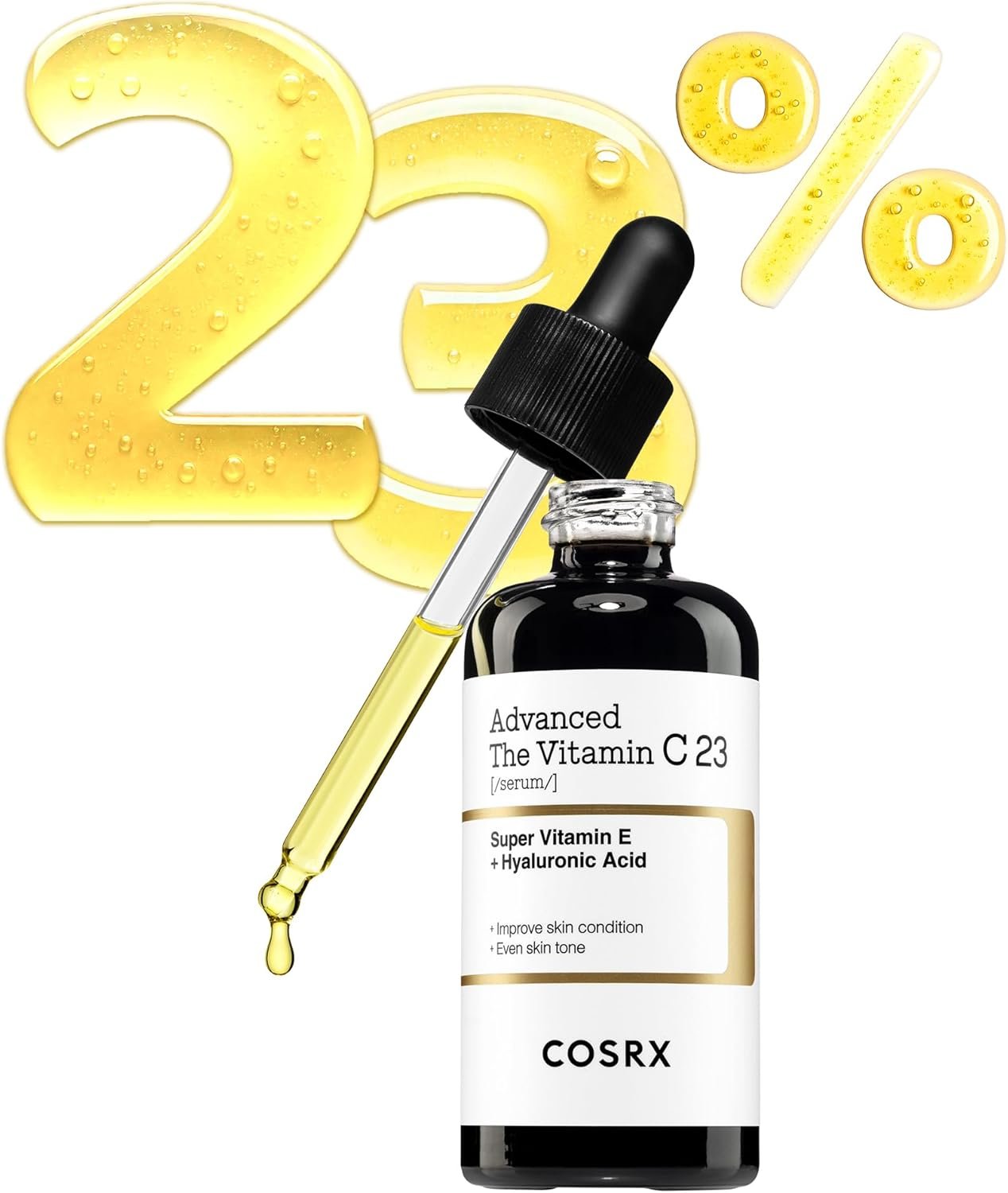
23% pure L-ascorbic acid — the highest potency vitamin C serum from a mainstream Korean brand available in the UK. At 23%, this delivers measurable tyrosinase inhibition, antioxidant protection, and collagen support in a single morning serum application. Apply immediately after opening and store in the fridge to slow oxidation. The choice for maximum brightening efficacy on UK skin dealing with urban pollution and photoageing.
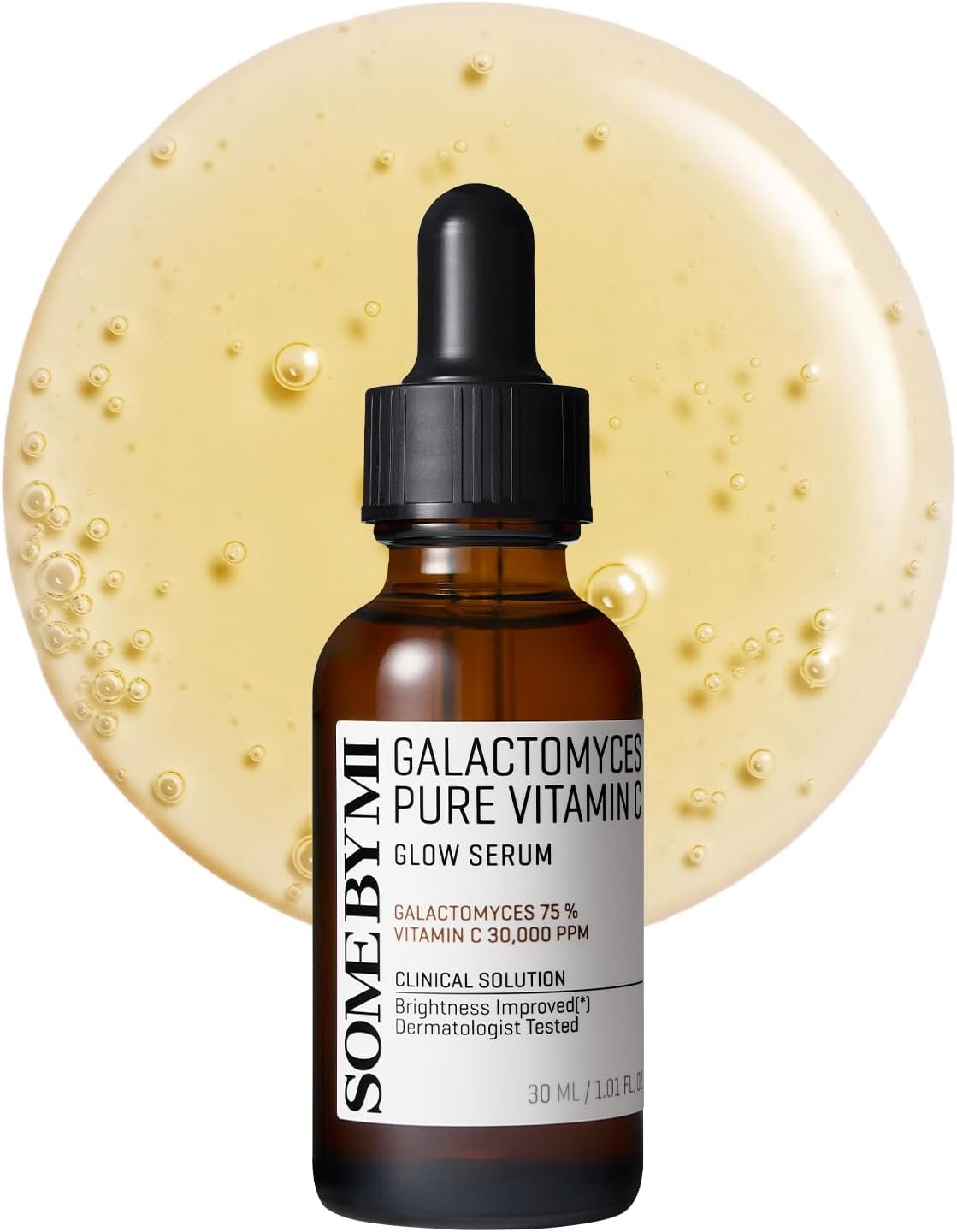
Vitamin C combined with galactomyces ferment and niacinamide — three brightening mechanisms in one serum. More gentle than the pure 23% COSRX formula and suitable for sensitive skin that finds high-concentration L-ascorbic acid irritating. The galactomyces improves translucency and luminosity while vitamin C targets melanin production and niacinamide inhibits melanin transfer. Consistent AM and PM use produces visible glow at 2–3 weeks.
Products above contain Amazon UK affiliate links. Full disclosure policy.
How to Use Vitamin C in a Korean Routine
Timing: AM application, after toner and HA serum, before moisturiser and SPF. Vitamin C applied before SPF provides additive antioxidant protection — the combination of topical antioxidant and UV filter is more protective than SPF alone against photoageing.
Frequency: Daily AM use for consistent brightening. PM use is optional — vitamin C is not photosensitising (unlike retinol) and can be used day or night, but AM use maximises the antioxidant protection benefit during UV and pollution exposure hours.
Storage: Store vitamin C serum (particularly pure L-ascorbic acid formulas) away from direct light and heat. Refrigerator storage slows oxidation significantly. Discard if the serum turns orange or brown — the active has oxidised.
Pairing: Vitamin C + vitamin E + ferulic acid is the most evidence-backed antioxidant combination — these three actives stabilise each other and produce synergistic photoprotection. Niacinamide pairs well with vitamin C at cosmetic product concentrations — the historic concern about interaction has been debunked.